Electric Vehicles FAQ
Michelin answers your questions
EV vs ICE
Not necessarily. As long as load capacity and speed rating requirements are observed, all Michelin tyre lines will function properly on both Internal Combustion Engine (ICE) vehicles and EVs. That said, tyres specifically engineered for electric vehicles offer real advantages in range, wear life, and noise reduction - and for Australian conditions, heat-resistant compounds make a meaningful difference over standard options.
In general, EVs are heavier than their ICE counterparts. Vehicle weight is a critical factor in tyre wear, with more weight leading to faster wear. In addition to more weight, EVs often have more torque available for rapid acceleration, combined with regenerative braking to recharge the batteries during deceleration. The combination of extra weight and regenerative braking results in more rapid tyre wear. On average, EVs will wear out a tyre faster than a comparable ICE vehicle. In some parts of Australia, the additional thermal stress from hot climate conditions can compound this effect, making tyre choice even more important.
Tyres adapted for EVs
Low Rolling Resistance. To maximise range, EV manufacturers generally demand tyres tuned for low rolling resistance. The push for lower rolling resistance tyres is not new or exclusive to EVs - vehicle manufacturers have been asking for them for decades to improve fuel efficiency.
Low Noise. Because EVs generate less engine noise, the sound produced by the interaction of the tyre and road becomes more noticeable. Tyres tuned for EVs offer the highest refinement in noise, often combined with other noise reduction technologies such as Michelin Acoustic. These technologies target specific frequencies generated on certain road surfaces, and the difference is particularly noticeable on Australian highways.
Wear: To cope with the added weight and torque of EVs, new generations of Michelin tyre lines have been engineered to offer increased wear potential. This is important in some parts of Australia, where high ambient temperatures accelerate tyre wear further.
Load: New generations of tyre lines now include more Extra Load (XL) sizes and higher speed ratings to match EV requirements. In addition, a newer standard known as HL (High Load Capacity) tyres is being introduced to the market, allowing for even greater load support on the same sized tyre without increasing air pressure.
Range: Michelin has been a pioneer in low rolling resistance technology for over two decades. Michelin tyre lines provide excellent low rolling resistance across every category, helping Australian EV drivers get the most out of each charge.
Range
Yes. As a tyre wears down, its rolling resistance decreases. Studies have shown a worn tyre offers better range compared to a new tyre of the same model. This means it is perfectly normal to notice a slight range decrease when fitting a brand new set of tyres.
There are two reasons for this. First, the impact of tyre differences is proportional to total range. A 10% improvement on a vehicle with a 400 km range is 40 km - a very meaningful difference for Australian drivers travelling between cities or into regional areas. Second, vehicles with extended range tend to carry heavier battery packs, and greater vehicle weight increases the energy loss through the tyre, making tyre choice more impactful.
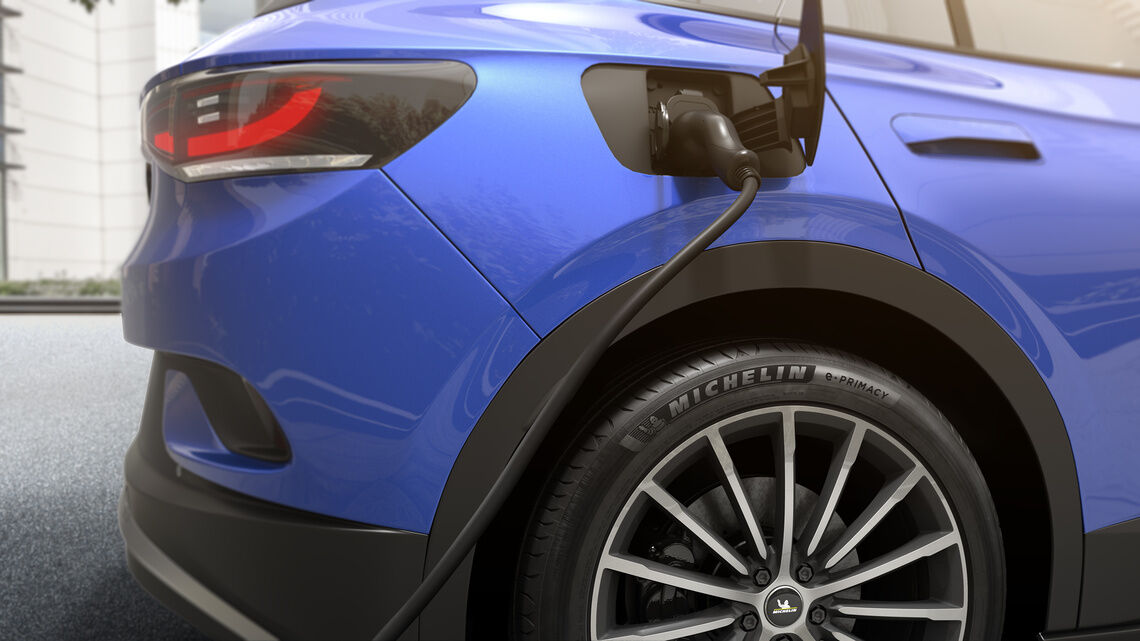
The MICHELIN e.Primacy and Primacy family of tyres are focused on low rolling resistance, offering the best range optimisation. Compared to other Michelin options such Primacy tyres generally provide a 10-15% range advantage. This can translate to 40 km or more of additional range on a long-range EV - a significant benefit for regional driving in Australia where charging infrastructure is less dense.
Australian EV conditions
Yes. High ambient temperatures increase the thermal stress on tyre compounds, which can accelerate wear beyond what is typical in cooler climates. For Australian EV drivers - particularly those in Queensland, Western Australia, and the Northern Territory - this makes choosing a tyre with a heat-resistant compound especially important. Maintaining correct tyre pressure is also critical in hot weather, as heat causes air pressure to rise, and underinflated or overinflated tyres both wear faster and perform less predictably.
Range anxiety - the concern about running out of charge before reaching a charging station - is a real consideration in Australia, particularly outside major cities. Australia has large distances between regional towns, and while the charging network is growing rapidly, rural coverage remains patchy. Choosing a tyre with low rolling resistance such as the MICHELIN e.Primacy can meaningfully extend the distance you can cover on a single charge. Planning routes around available chargers using apps from networks like Tesla Supercharger, NRMA, Chargefox, or Evie Networks is also recommended.
Yes, for the most current information, check your state government's transport or treasury website, or speak to your vehicle dealer.
For long highway drives and regional travel, the key priorities are low rolling resistance (to maximise range between charges), heat resistance (to cope with Australian road temperatures), and load capacity (especially important if you are towing a caravan or trailer). Tyres that excel in wet grip are also valuable given Australia's variable weather across different regions. The MICHELIN e.Primacy is a strong starting point for range-focused touring, while the MICHELIN Pilot Sport EV suits performance-oriented EVs.
Related articles
-

How to choose the best tyres for my car
What tyres do I need? How to choose the best tyres for my car? If you are asking yourself these questions, our article will help you to consider the important criteria for making the right choice.
The tyre size might seem to be the only important factor in deciding which tyres to buy. However, as we will see, it is also essential to take into account your driving style and climatic conditions. To help you make the right choice, we'll also mention the European labelling system and provide you with a decision-making tool.Learn more -
How to increase the electric car range?
Do you want to improve your electric car’s range? Discover the challenges and solutions to get maximum mileage from your electric car.Learn more -

Do you need specific EV tyres for your electric vehicle?
Discover everything you need to know on suitable tyres for electric vehicles, and how they contribute to range, energy consumption and the overall driving experience.Learn more