Fundamentals of motorcycle braking
Before delving into techniques on how to stop a motorcycle, it's essential to understand your motorcycle's braking system. Most modern motorcycles feature disc brakes, with some old models still using drum brakes on the rear wheel.
Beginners often wonder which is the most effective stopping brake on a motorcycle. The answer is the front brake. It typically provides about 70% of the stopping power, making it the primary focus in most braking scenarios.
The physics of braking involves weight transfer. As you brake, the motorcycle's weight shifts forward, increasing traction on the front tyre and reducing it on the rear. This principle underlies many motorbike riding tips, including advanced braking techniques.
Basic braking Techniques
Anticipate stops
Look ahead and brake earlier, allowing for gentler deceleration instead of sudden braking.
Check the mirrors
Don’t forget to check for the traffic around you to ensure safe braking, especially when cornering with other vehicles following closely behind you.
Choose the fingers you need
An important aspect of brake control is how many fingers you use on the front brake lever:
Two-finger braking: This technique involves using your index and middle fingers on the brake lever. It's typically recommended for modern motorcycles with powerful brakes. Two-finger braking allows you to maintain better control of the throttle and is usually sufficient for most braking situations. It's particularly favoured in sport and performance riding.
Four-finger braking: This involves using all four fingers on the brake lever. It may be necessary for older motorcycles with less powerful brakes or in emergency situations where maximum braking force is required. New riders often start with this method as they build confidence.
The choice between two-finger and four-finger braking depends on your motorcycle's brake system, your riding style, and personal preference.
Progressive braking
Apply the brakes gradually, increasing pressure as you slow down. This technique, known as progressive braking, prevents skidding and allows for smoother, more controlled stops. It's particularly crucial on slippery surfaces or in emergencies.
Brake in a straight line
Whenever possible, brake while the motorcycle is upright and travelling straight. This position provides maximum traction and stability. If you must brake while leaning, do so gently to avoid upsetting the bike's balance.
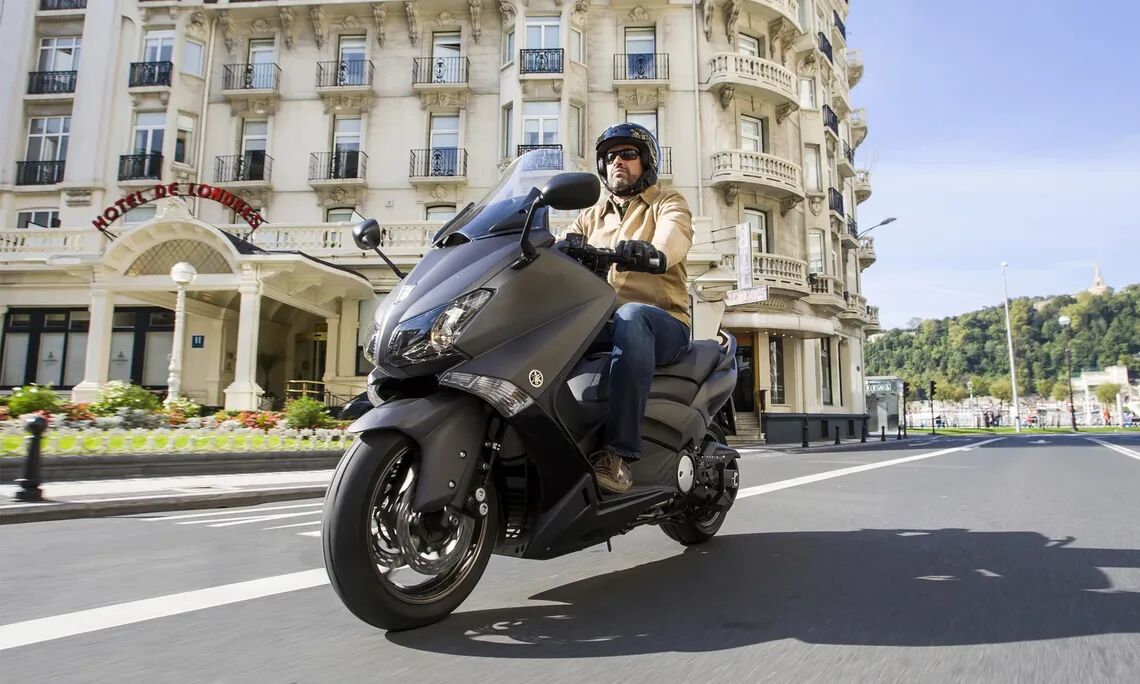
Advanced braking techniques
Combine both brakes effectively
While the front brake is more powerful, using both brakes in tandem provides optimal stopping power and control. The key is to use the rear brake first to give you control, then follow shortly afterwards with the front brake.
Many modern motorcycles are equipped with Anti-lock Braking Systems (ABS), which prevent wheel lock-up during hard braking. If your motorcycle doesn't have ABS, you must modulate brake pressure to prevent skidding. In most scenarios, you should apply roughly 70% pressure on the front and 30% on the rear brake.
You might need some practice to be familiar with this technique and get the most effective braking while being able to maintain vehicle balance. This is an essential technique for your riding safety, especially in emergencies.
Engine braking
This is the technique used predominantly in motorbikes with manual transmission where you pull a clutch lever, gently shift down one gear, gradually release the clutch, and rev-match (blipping the throttle while the clutch is disengaged to find the next lower gear). By correctly doing this, the motorbike will slow down smoothly. The slower the vehicle is, the easier you can engine brake.
Trail braking
It is an advanced technique that involves continuing to brake as you enter a corner. As you lean into the turn, gradually release the motorbike brakes. This technique allows for later braking before corners and provides more control over your speed and line through the turn.
To trail brake effectively:
Begin braking while upright, before entering the turn
As you lean into the corner, gradually ease off the brakes
Continue to release brake pressure through the turn until you're ready to accelerate out
While trail braking can be highly effective, it requires practice and should be learned gradually in a safe environment.
Minimising tyre wear during braking
Knowing how to brake on a motorcycle properly will not only improve safety but also reduce unnecessary tyre wear. Here are some key points to remember:
Drive slowly
Riding at reasonable speeds reduces the need for sudden braking that can cause excessive wear and lead to flat spots on your tyres.
Smooth application
Apply brakes smoothly and progressively to lessen tyre wear and flat spots.
Use engine brake
You should use the engine brake in conjunction with your brakes to reduce overall brake load and tyre wear. The engine brake can be very useful when cornering and during a long descent.
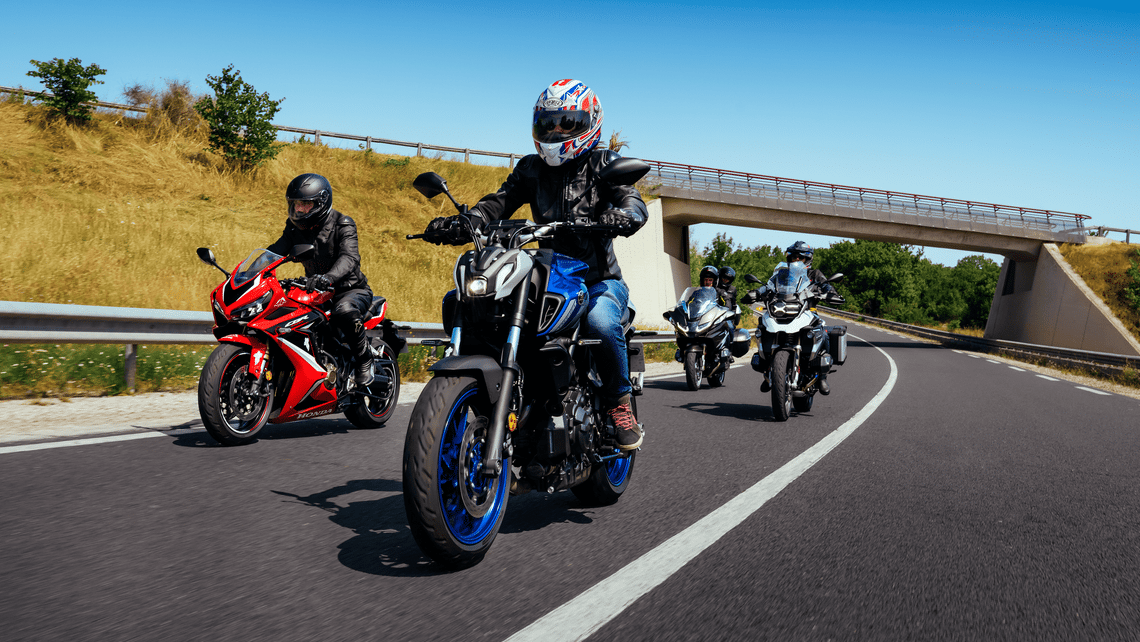
The confidence you need for braking
Mastering proper braking techniques is essential for every motorcyclist. It not only enhances your safety on the road but also extends the life of your tyres. Remember, the key to effective braking lies in smooth, progressive application, using both brakes, and adapting your technique to different riding conditions. While this article provides a solid foundation of how to brake on a motorcycle, nothing beats practical experience. Continue to practice and refine your skills to become a safer, more proficient rider.
Having a pair of high-quality tyres on your motorcycle can help you achieve the braking performance and confidence you need no matter how much experience you have. Browse our wide selection of motorcycle tyres here.
Related articles
-
MOTORCYCLE SAFETY: HOW TO IMPROVE IT?
The main cause of death among young people, road accidents kill 1.2 million people every year and injure 50 million. Governments, international organisations and companies must increase their efforts to make roads safer for everyone and implement a system of education and training.
Michelin, a member of the European Road Safety Charter, contributes to these objectives by carrying out awareness raising and educational campaigns for road users.
How can you improve your safety on a motorcycle? Our experts will give you the answers in this article.Learn more -
Motorcycle handlebar vibration, wobble and other handling difficulties
Some unpleasant sensations can occur while riding your motorcycle: vibrations, wobbles, kickbacks or weaves. Why do these phenomena happen and how can they be solved? Read the answers in our article.Learn more -
HOW TO CORNER ON A MOTORCYCLE
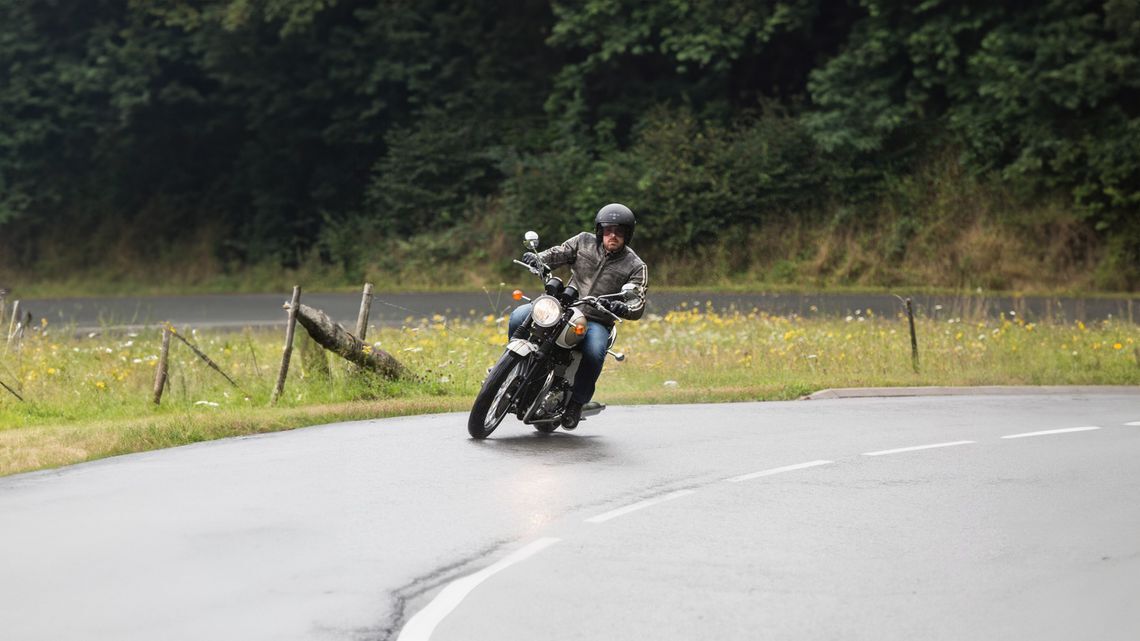
This is a question that may seem trivial, but it will be at the centre of your preoccupations if you’re starting out as a motorcyclist. There are steps to follow, behaviour to adopt and precautions to take so that you can corner with peace of mind and in complete safety. In this article, our experts share their experience and explain to you how to corner on a motorcycle. We will also explain how to make a u-turn on a motorcycle.Learn more