The main performance criteria for tyre comparison
To ensure effectiveness, tyres need to deliver numerous, often conflicting, performance characteristics. Improving one of these performances must not be to the detriment of the others.
Traction or grip
Tyres are the only contact point between your vehicle and the road, which makes grip the most fundamental performance criterion of all. Your ability to brake safely, corner confidently, accelerate smoothly, and stay stable at higher speeds all depend on your tyres' grip. Different tyres are designed to provide grip in specific weather and road conditions - which is why it is so important to think carefully about where and how you drive before making your choice.
For Australian drivers, wet grip on summer storm-soaked roads is particularly important, as is heat-stable grip on hot highway surfaces. If you drive on unsealed roads or tracks, traction on loose surfaces becomes an additional consideration.
Longevity
How long a tyre lasts before wearing out its tread is a key factor in getting value for money. There can be significant differences in tyre lifespan depending on the design and quality of the tyre. Performance tyres (sometimes called high-performance or sport tyres) tend to have a shorter tread life than standard passenger car tyres, because their design prioritises grip and responsiveness over longevity. How and where you drive also has a big impact - frequent braking in city traffic, high-speed highway cruising, and towing a loaded caravan all wear tyres in different ways.
For Australian drivers covering long distances, particularly on highways, longevity is often a higher priority than for city drivers. A tyre that lasts longer between replacements is not only better value, it also means fewer stops on a long trip. For utes and SUVs carrying heavy loads, choosing a tyre engineered for durability under load is especially important.
Energy efficiency and fuel economy
Did you know that around one in every five tanks of fuel a car uses is attributable to the rolling resistance of its tyres? Tyres have a real and measurable impact on fuel consumption. Some tyres are built with specific constructions and compounds that reduce rolling resistance, which translates directly into fuel savings - or, for electric vehicles, extended battery range.
For Australian drivers, this matters more than in many other markets. Long highway journeys between cities or into regional areas mean that fuel efficiency compounds over thousands of kilometres. For SUV and ute owners - who make up a large proportion of Australian new car buyers - the fuel savings from a low-rolling-resistance tyre can be genuinely significant over the life of the tyre. The Michelin Primacy 5 Energy is a strong example of a tyre built around this principle, combining low rolling resistance with strong wet-weather performance.
Handling
Handling describes how well your vehicle responds to driver inputs - steering, braking, accelerating - and to changing road conditions. A tyre with great handling characteristics keeps the vehicle stable and the driver in control, which improves both safety and driving enjoyment.
The tyre transmits every instruction from the steering wheel through to the road surface. In general, sporty high-performance tyres are designed to maximise handling precision and responsiveness, with sharper steering feedback and better cornering grip. For Australian drivers who enjoy driving on winding mountain roads or who want strong performance from a sports or performance car, a tyre from the Michelin Pilot Sport family is worth prioritising in the comparison.
Comfort and Noise
Driving comfort is how well the tyre cushions you from the bumps and imperfections in the road surface. Tyres built for comfort use specific internal construction to absorb vibration and provide a smooth, refined ride - important for long highway drives and city commuting alike.
Noise is closely related to tread design. The more aggressive a tyre's tread pattern looks, the higher the chance it will generate more road noise - particularly at highway speeds. Tyre noise becomes more noticeable on long Australian highway drives where you may spend hours at a time at 100-110 km/h. If a quiet cabin is important to you, look for tyres that specifically mention noise reduction or acoustic technology (available on certain sizes). That said, tread grooves play an essential role in wet-weather grip and water evacuation, so it is worth deciding whether the trade-off in exchange for more traction is worth it for your driving.
Robustness
Robustness is a tyre's ability to withstand the everyday hazards it encounters on the road - potholes, rough surfaces, sharp gravel, and debris. For Australian drivers who regularly travel on unsealed roads, remote tracks, or poorly maintained country roads, robustness and sidewall strength become high priorities. A stronger tyre carcass and reinforced sidewall construction significantly reduce the risk of damage in these conditions. In remote areas where roadside assistance may be far away, a puncture-resistant tyre can be the difference between a minor inconvenience and a serious situation.
Long lasting performance
Whatever performance criteria matter most to you, it is essential that they hold up throughout the life of the tyre - not just when the tyre is brand new. Some tyres perform impressively out of the box but deteriorate quickly as the tread wears down. Wet-weather braking performance in particular can degrade significantly as a tyre ages.
Maintaining strong performance from the first kilometre to the last is precisely what Michelin demands of all its tyre ranges. In developing and manufacturing its tyres, Michelin focuses on achieving the best possible performance when new, and sustaining that performance at an excellent level all the way to the wear indicators. Safe when new, Safe when worn.
How to compare tyres within the same tyre line?
Each Michelin tyre line is available in a range of sizes to suit different vehicles. Within a given tyre line, the same size can sometimes be offered in multiple versions with different technical specifications, such as:
Speed ratings (for example: H, V, W, Y)
Load index (for example: 91, 94, XL, HL)
OE markings (Original Equipment - tyres developed in cooperation with a specific vehicle manufacturer)

These technical specifications are important details that can determine whether or not that version is compatible with your vehicle and the way you drive.
If several versions are compatible with your vehicle, we recommend that you choose the version with the same specifications as your original equipment tyres, including the correct OE marking.
The OE marking concerns tyres developed in cooperation with car manufacturers that meet more specific requirements, proper to each car brand. For example, the "MO" marking means that the tyre is approved by Mercedes for its vehicles.
However, the OE marking is not a requirement as long as the size, speed, and load indexes are respected.
You can also safely select a version with higher speed rating or load index; however, higher speed or load capability can negatively impact tread life and ride comfort.
Independent tests to help you compare tyres
Independent tyre testing organisations and specialist automotive publications test tyres under rigorous, controlled conditions each year - assessing braking, handling, rolling resistance, noise, wet-weather performance, and more. These results offer objective comparisons across brands and models that are very useful when making a purchasing decision.
Michelin tyres are regularly put through independent tests and have received numerous awards over the years for their objectively assessed performance. When reviewing test results, pay attention to which criteria were tested, the tyre size used, and whether the results are from new or partially worn tyres.
MICHELIN's tyres are regularly tested by independent tyre testers and have received numerous awards over the years for their objectively assessed effectiveness.
Compare tyres with the european labelling
European labelling is designed to help you compare different tyre models (from different brands or within the same brand) on objective criteria.
For example, if you want a MICHELIN summer tyre, you may be hesitating between the MICHELIN Primacy 4 and the MICHELIN e·Primacy. The labelling will indicate that the MICHELIN e·Primacy has a better rolling resistance, which helps to reduce your fuel consumption and CO₂ emissions. If you are sensitive to these concerns, the labelling will then lead you to the MICHELIN e·Primacy.
Labelling can therefore be an aid to decision-making. However, you should be aware that it is limited to a few criteria and that it only measures tyres when they are new, which does not tell you everything about a tyre's performance.
Compare tyres with tyre comparison sites
Using tyre comparison sites can be helpful, but it is important to remember that their comparisons are generally based on new tyres which means that they do not put the tested tyres into perspective beyond a certain level of wear (once they have covered a few thousand miles).
Yet some tyre performances become less effective with wear, particularly on wet roads and especially when braking. Therefore, it is also important, when comparing tyres, to assess the performance of tyres once they start to wear.
Choosing tyres with performance made to last
Maintaining the performance of the tyre until the very last mile is precisely what Michelin demands of its tyre ranges.
In the development and production of our tyres, we strive to obtain the best performance without compromise when they are new, and that this performance remains at an excellent level until the very last mile, once the maximum wear level has been reached.
See other related articles
-
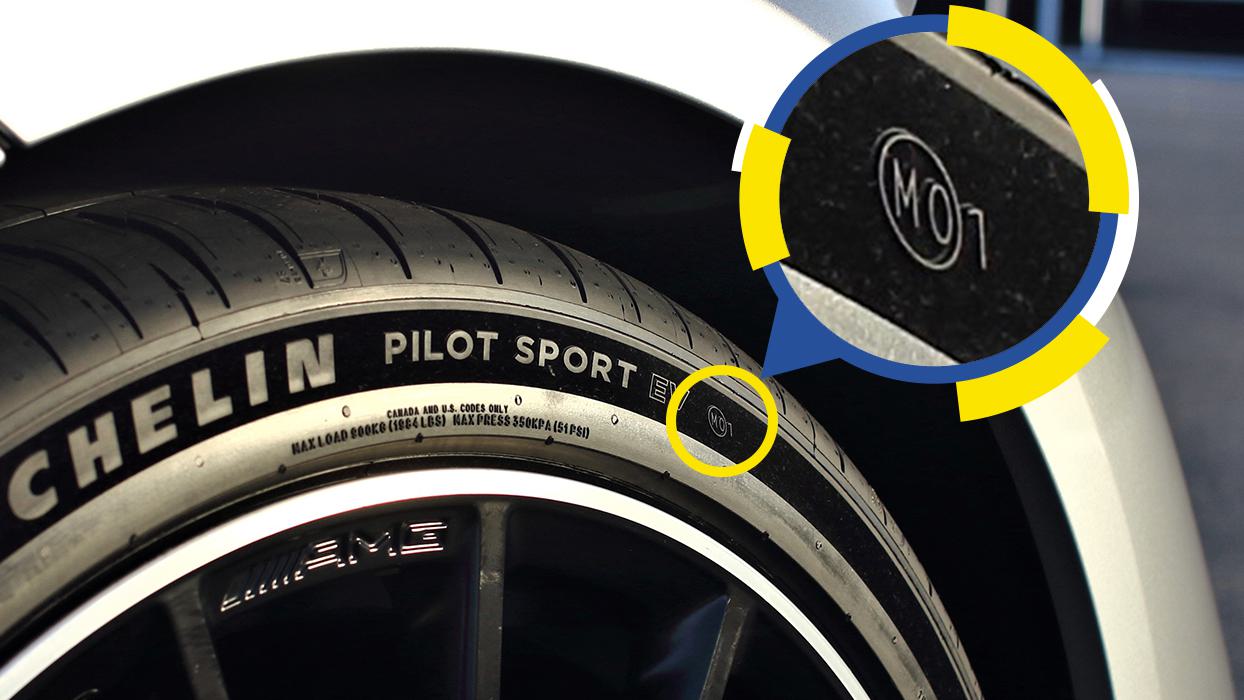
MICHELIN-developed marked tyres
Michelin believes that working closely with car makers is essential when it comes to developing high-performance tyres. Its engineers use their expertise to select the best technologies and materials as a function of the individual characteristics of each car model, thereby ensuring superior performance and ride comfort, and a truly unique driving experience!View more -

How to choose the best tyres for my car
What tyres do I need? How to choose the best tyres for my car? If you are asking yourself these questions, our article will help you to consider the important criteria for making the right choice.
The tyre size might seem to be the only important factor in deciding which tyres to buy. However, as we will see, it is also essential to take into account your driving style and climatic conditions. To help you make the right choice, we'll also mention the European labelling system and provide you with a decision-making tool.View more -

How can tyres improve mileage and fuel economy?
Knowing about the tyre-fuel efficiency relationship can help you travel further on a full tank, which is not only good news for your wallet, but also for the environment. Here, we look at how to improve fuel economy, with a focus on the tyre and fuel efficiency codes: how to understand the label, and what the fuel efficiency tyre chart really means.View more