In This Article, You’ll Learn
Why you need to check car tyre pressure regularly
When should you check tyre pressure
How often should you check tyre pressure
Where to go for a tyre pressure check
How does a tyre pressure check work
Why You Need to Check Car Tyre Pressure Regularly
Flat tyres and steering difficulties are all signs of tyre pressure loss. This section of our article provides reasons for the pressure drop.
Your tyre might be losing air for various reasons, including:
• Unsealed Tyre Valve
If the valve is not properly sealed, this weak point can lead to a slow but persistent pressure leak.
• Poor Wheel Rim Condition
The state of the wheel rim is also crucial. On older wheels, corrosion or rust can prevent a perfect seal against the tyre, causing air to gradually escape.
• Exposure to Heat and Sunlight
Direct and prolonged exposure to sunlight can affect tyre pressure. The heat causes the air inside a tyre to expand, accelerating the rate at which air permeates through the rubber.
• Slow Punctures
A small puncture from an object like a nail or a screw is a frequent cause. Most of the time, this type of damage often results in a very slow leak that is less noticeable.
While minor pressure differences between your tyres are normal, a significant and recurring drop in a single tyre often indicates an underlying fault.
If you spot major tyre pressure differences, we recommend having your tyre inspected by a professional to ensure proper inflation and protection against potential premature wear.

When To Check Tyre Pressure?
For an accurate result, it's best to check your tyre pressure when the tyres are cold. This generally means checking before you drive for the day or after your vehicle is left outside for a long period of time.
As you drive, your tyres warm up, causing the air inside to expand and the pressure to rise. A pressure check on a warm tyre will give you a false high reading. Removing air to match the recommended pressure will only under-inflate the tyre once it fully cools, which makes it unfit for use.
How Often Should You Check Tyre Pressure?
For optimal safety, fuel efficiency, and tyre longevity, we recommend checking tyre pressure at least once a month and before embarking on a long journey. Making this simple check a regular part of your vehicle maintenance routine is one of the easiest ways to ensure your car performs at its best.
Where To Go For A Tyre Pressure Check?
You have several convenient options when it's time to check your tyre pressure. The most common and accessible choice is to visit a local petrol station, as many are equipped with dedicated air compressors and inflation zones.
Check out your local Michelin dealer for a more thorough tyre pressure check.
Checking Tyre Pressure At Home
Checking tyre pressure at home is a convenient option. However, you’ll need to use the same compressor for each check to ensure that your readings are consistent.
This approach prevents any slight variations in calibration between different devices from affecting the accuracy of your tyre pressure measurements.
This approach prevents any slight variations in calibration between different devices from affecting the accuracy of your tyre pressure measurements.
What You’ll Need
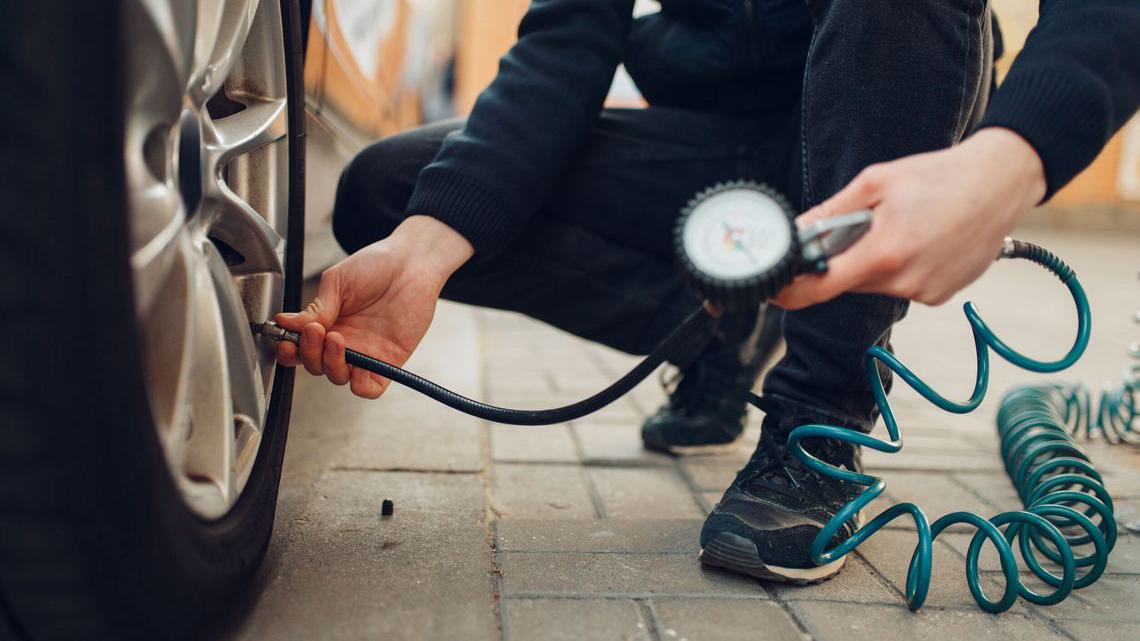
Getting an accurate tyre pressure reading is a simple process that only requires a few basic tools like tyre pressure gauge and air compressors.
What is the difference between an air compressor and a tyre pressure gauge?
A tyre pressure gauge is one of the most essential tools in tyre pressure measurement. As the name suggests, a tyre pressure gauge is used to measure the amount of air inside your tyre.
An air compressor or an air pump keeps your tyre pressure in check by adding more air into your tyre when the pressure is low.
Having essential tyre pressure tools in your toolkit will guarantee you an accurate tyre pressure assessment. Discover tyre pressure gauge and other auto accessories from Michelin.

A Quick Guide To Checking Tyre Pressure
Here is a simple, step-by-step guide to accurately checking tyre pressure.
1. To start, prepare the valve for your tyre pressure check.
Carefully remove the small cap from the tyre's valve stem and keep it in a safe place, like your pocket.
2. Connect the compressor to your valve stem.
Press the compressor's nozzle onto the valve stem to connect the two together. You should hear a short hiss of air that stops once a secure seal is formed. Check the gauge to see the current tyre pressure.
3. Cross reference your car tyre pressure
The next step involves comparing the displayed pressure with the recommended level for your vehicle.
In cases where the pressure is too low, press the handle or plus-sign button to inflate the tyre. Add air in short bursts, allowing the gauge to update, until you reach the target pressure.
If the pressure is too high, use the minus-sign button or the small pin on the nozzle to release air in small increments until the correct pressure is reached.
4. Put the valve cap back on
Once the pressure is correct, quickly remove the nozzle and securely screw the cap back on to prevent dirt and moisture from entering the valve.
No Tools? No Worries!
Our tyre experts are here to help. Use Michelin Dealer Locator to locate tyre dealers near you.


Find the nearest professional
Search among our dealers to find where your tyre is available
Frequently Asked Questions
Where can I find the correct tyre pressure for my car?
Finding the manufacturer's recommended tyre pressure is a vital first step when you check car tyre pressure. You can find this information on a sticker inside the driver’s side doorjamb, inside your vehicle manual, and occasionally on a sticker inside the fuel filler door.
Does the outside temperature affect my tyre pressure?
Yes, the ambient temperature has a direct and significant impact on your tyre pressure. As a general rule, tyre pressure decreases in colder weather and increases in warmer weather. This is why regular checking tyre pressure is especially important during seasonal changes, as a significant temperature drop can lead to underinflated tyres.
Should I check my tyres when they are hot or cold?
Understanding how to check tyre pressure correctly includes knowing the right time to do it. For the most accurate reading, you should always check your tyres when they are cold. This means the vehicle has been stationary for a long period of time or has not been driven for more than a couple of kilometres at low speed.
Driving heats up the air inside your tyres, causing it to expand and giving you an inaccurately high-pressure reading.
See other related articles
-
How to fill tyres with air?
Tyre pressure is an important factor to ensure your safety and that of your passengers. If your tyre pressure is incorrect, it can also impact your vehicle's operating costs through premature tyre wear and higher than normal fuel consumption.
In this article, you will learn when you should check your tyre pressure and how to fill tyres with air in 3 simple steps. You will see that tyre pressure has to be done differently depending on whether your tyres are cold or warm and that the spare wheel should also be checked regularly, although not as often as the other tyres.
We will also address the question of the portable tyre air compressor as an alternative to petrol stations and help you decide if you should fill tyres with nitrogen.View more -
What tyre pressure for my car?
Having the correct recommended tyre pressure in your vehicle’s tyres not only optimises the performance but also increases your personal safety and those of other road users when driving.
On the other hand, incorrect tyre pressure will reduce the grip of your tyres and increase your braking distances. It can also damage your tyres, reduce their life span and increase your fuel consumption. Let's take a look at how to avoid these risks and what tyre pressure is needed for your vehicle.View more -

TPMS : Tyre Pressure Monitoring System
The TPMS (Tyre Pressure Monitoring System) allows you to detect when your tyres are too low in pressure. It has been compulsory in Europe since 1 November 2014 (in the USA since 2007), which means that your vehicle is equipped with it if it was manufactured after this date.
In practical terms, TPMS is able to display your tyre pressure level on your dashboard via an indicator or warning light.View more