What is tyre tread?
Tyre tread is a set of patterned or textured grooves that has direct contact with the road surface. Its primary function is to maintain traction on the road, enhance vehicle handling and disperse water to prevent aquaplaning.
Why is your tyre tread important for safety?
The grooves in your tyre tread channel water or debris away from the contact patch, which lowers the risk of aquaplaning.
The increased friction between your tyre blocks and the road also works to improve vehicle control when accelerating, braking, or steering on wet surfaces.

How to check your tyre depth
Regular tread checks can help you better monitor the conditions of your tyres. Here are two easy-to-follow methods that you can use to identify potential signs of tear and wear.
Measuring tyre tread with a tread wear indicator
One of the simplest ways to look for wear is to use a built-in tread wear indicator or TWI. A TWI is a small rubber bar that sits inside the main grooves of the tread.
On MICHELIN tyres, the Michelin Man figure shows where these indicators are in each of the main grooves of the tread.
When the surrounding tread has worn down and flushes with the indicator bar, your tyre has reached its legal wear limit. A tyre at this stage must be replaced immediately.
Measuring tyre tread with a tread depth gauge
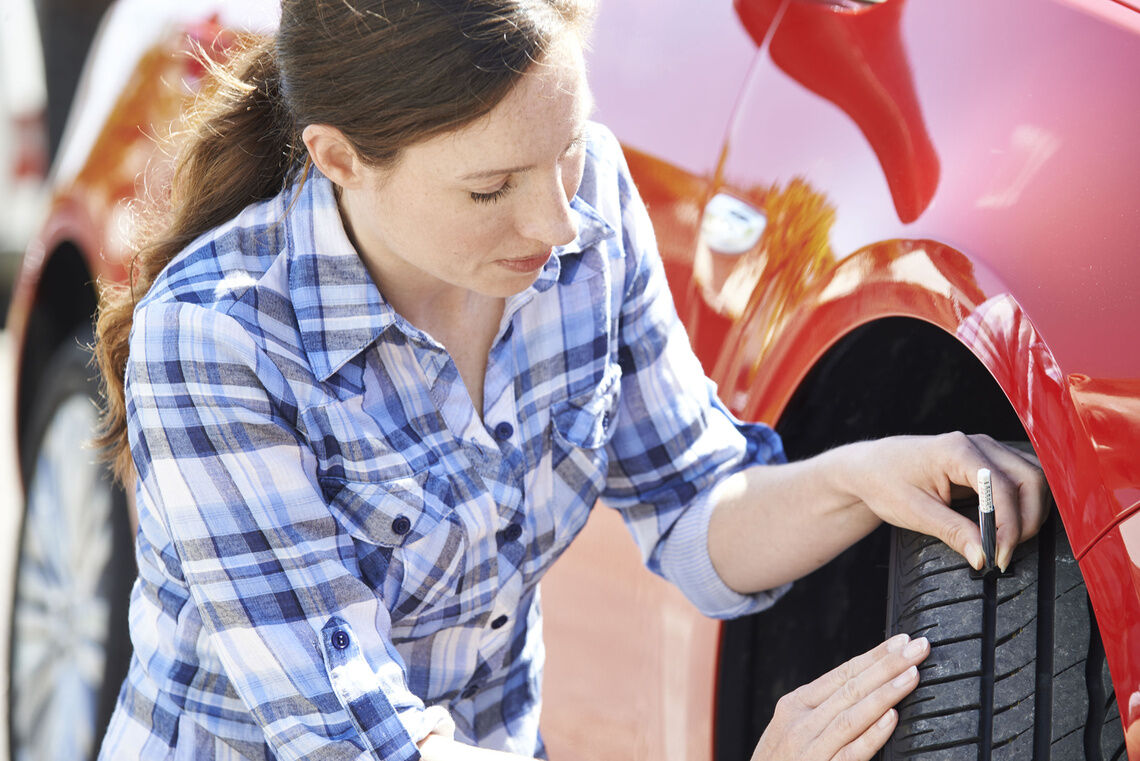
A dedicated tread depth gauge will also give you accurate measurement of the depth of your tread. To use one, push the tool's probe into a tread groove — not on the TWI — and press its base flat against the surrounding tread blocks.
We recommend that you take measurements at different points across the tyre to monitor the rate of wear and determine whether or not you need a tyre replacement.
Understanding tyre wear
After measuring your tyre tread, it is important to understand what the results indicate.
What is the legal tyre tread depth in Australia?
In Australia, the legal minimum tyre tread depth is 1.5mm. A tyre is considered unroadworthy if its tread is worn below 1.5mm. This rule applies to any point across the central three-quarters of its width and around its entire circumference.
While 1.5mm is the legal limit, a tyre’s performance in wet weather diminishes progressively.

Common signs of uneven tyre wear
Frequent observations of your tyre tread can reveal underlying issues with your vehicle before they become critical. Overlooking signs of uneven tyre wear can lead to compromised vehicle handling and safety on the road.
There are 3 types of tyre wear that you should be aware of.
Center Wear
A narrow band of heavy wear in the center of your tyre tread is an indication of overinflation. When a tyre has too much air pressure, the tread surface bulges outward on the centerline and lifts its outer shoulder off the road. With a reduced contact patch, your tyre relies on a small surface area to handle acceleration and braking forces.
Driving with rigid tyres can further impact your driving experience. Since there is less cushioning on your tyres, you are more susceptible to damage from potholes and road debris.Edge Wear
Edge wear happens when the shoulders of your tyre wear down faster than the center of your tyres due to chronic underinflation. Adding in too little pressure into your tyres causes the center of your tyres to flex away from the road surface which puts excess weight of the vehicle onto the two remaining outer shoulders.
Since you need two shoulders to keep the wheels rolling, expect your fuel economy to drop. Constant flexes like this can lead to overheating, weakened inner tyre structure, and unexpected blowouts.One-sided Wear
Wear that is noticeable on one side of your tyre is another sign of an uneven tyre wear and wheel alignment issue. When your tyres are misaligned, they do not maintain flat contact with the road. You are then likely to feel a strong pull towards one side of the road due to rapid erosion of either your inner or outer tread blocks.
To maintain the equilibrium of your vehicle, you would need constant steering correction. While this short-term solution can keep your vehicle going for some time, this driving behaviour can put unnecessary stress on your steering and suspension components.
Notice a sign of tyre wear?
Visit your local Michelin dealers for a professional inspection. Our tyre specialists are here to offer advice and answer your questions.


Find tyre dealers near you in seconds
Frequently Asked Questions
How much tread do new tyres have?
In Australia, new passenger car tyres come with 8-9 mm of tread depth. To learn about the specifications of your vehicle type, reach out to our team here.
What causes uneven tyre wear?
There are multiple explanations for uneven tyre wear. However, some of the more common causes include improper inflation, incorrect wheel alignment, and issues with vehicle suspension or steering components like shocks and struts. Find out more in this article.
How can I make my tyre tread last longer
You can maximize the lifespan of your tyre tread through regular tyre maintenance and good driving habits. Bringing your tyres in for a monthly checkup helps you maintain the correct tyre pressure and quickly identify signs of wear and tear. Another essential practice is to avoid hard braking, acceleration, and cornering.
See other related articles
-

How to Change a Tyre & Professional Tyre Fitting
Fitting tyres into the car during an emergency is a nightmare for many car owners. While you can call for help from nearby tyre experts, there may be times when professional help is unavailable, and you must rely on your skills and knowledge to get yourself back on the road. This article provides a step-by-step guide for changing a flat tyre in an emergency and an overview of what to expect from a tyre replacement service.View more -

Tyre manufacturing and recycling
Tyres: four rubber rings that can take you thousands of kilometers, carry heavy loads and run on rocky, wet, snowy or icy roads. How are tyres made? How does tyre recycling factor into our manufacturing process? Find the answers in this article.View more -

How to fit a spare tyre?
Getting stuck with a flat tyre is an unfortunately common occurrence that all drivers experience at some point. That’s why it’s essential to know exactly what to do when you get caught out – and to make sure you have all the equipment necessary to make a quick flat tyre change, so that you can get back on the roads as soon as possible.View more